

Sales compensation AI calculates commissions and explains them, so a rep can ask “why did I get paid this?” and get a precise answer from the same system that calculated the payout instead of opening a ticket with the comp team. That was one of the main points Variabl co-founder and CTO Alex Gaputin made on the Sastra Spotlight podcast, hosted by Brodie Read-Owen for Sastra Group.
For sales leaders, comp admins, finance teams, and enterprise companies managing complex incentive plans, that matters because traditional commission processes start to break at scale: errors creep in, admin costs rise, and reps lose trust when payouts are hard to explain.
Alex covered where enterprise plans become fragile, what a 3 to 5% error rate costs, how AI reduces those errors and support load, how it gives reps transparent payout answers, how admins can model plans before launch, and how finance leaders can get faster insight from compensation data. Here are the main points, with his words where they matter.
Why do commission plans break at enterprise scale?
A small sales team can run commissions in a spreadsheet. As companies grow, manual processes stop keeping up, and an enterprise with thousands of sellers can’t rely on them. “There’s dozens of plans with very complicated structures,” Alex said. “There’s different regions that people have to work with, different currencies, people coming in and out.”
At that scale, the plan is only as good as the people who have to administer it. Alex sees the same pattern often: a sales leader designs an intricate plan that makes sense to them, then hands it to the team that has to run it, and the details get lost. “In their mind [the plan is] perfect,” he said. “But once you hand that off to others to actually implement them, it’s hard for them to see all the details.” That creates an administrative burden for sales operations and can erode trust with sales reps when commission calculations are hard to explain.
What does a 3 to 5% commission error rate cost?
Alex put it plainly: “In this industry, the error rate that’s acceptable is around 3% to 5%, but for some of these bigger companies, that’s humongous numbers.”
One Variabl client told the team they had overpaid commissions by about $10 million in a single year. On a large enough commission budget, a few percent of error stops being a rounding issue and becomes a line the CFO asks about.
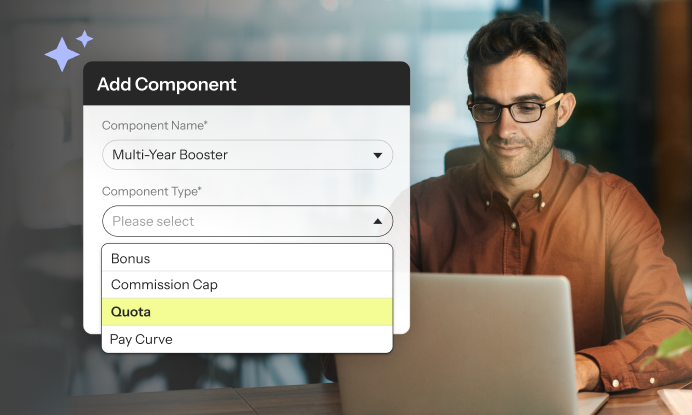
Variabl’s answer is in how the platform is built: a structured approach to sales compensation plan setup and compensation plan design. Every concept in a sales compensation plan, from quotas and tiers to rates, splits and crediting rules, is its own defined and tested component.
Admins set up a plan by answering plain questions: who gets a quota, what is it, who gets a tier. “You don’t need to have any complicated formulas,” Alex said. Because the components are tested and Variabl handles the integrations, “you don’t need to try to figure out, is this formula gonna work for this edge case or another?” His view is that this gets the error rate “basically to zero.”
What does sales compensation AI actually do?
Alex described three jobs AI does inside Variabl, and all three depend on that component architecture. Because each part of a plan is well defined, Vai, Variabl’s AI assistant, has precise context for every quota, tier and rate it’s asked about.
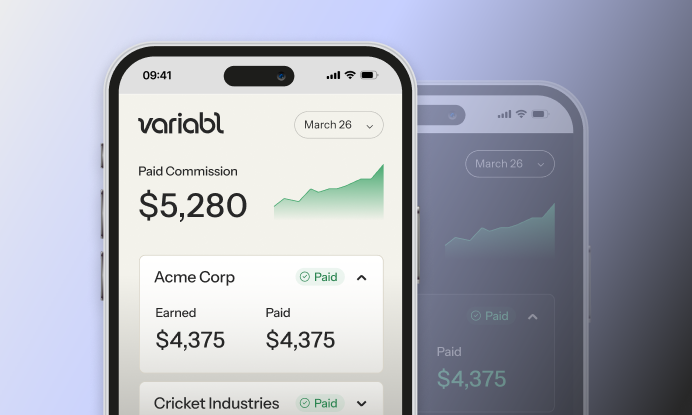
It answers reps’ payout questions. One of the biggest costs in comp administration is the stream of questions from sellers who think their commission was calculated wrong. With Vai, a rep can ask the application directly. “Why did I get paid this? What’s the best way to get the most out of the plan that I’m assigned to?” Reps who can see what they earned, and why, stop keeping their own records on the side. Alex called it shadow accounting, and the cost is real: reps “losing sleep because they have their own families and things to take care of.” Erik Charles’s book The Carrot IS the Stick puts the time reps lose to this at up to 20% when the plan is opaque.
It helps admins model plans before they launch. Comp and finance teams can ask how much the company should expect to spend on commission this year, and compare A, B and C versions of a plan before rolling one out. The plan that ships is one somebody already costed.
It gives finance and leadership fast answers. The CFO, or anyone who needs to know what’s happening in the data, gets the answer without waiting for an analyst to pull a report.
The result, in Alex’s words, is that the comp admin stops being someone “trying to catch up every single pay cycle” and becomes “a strategic asset to the company.” They can change plans when the business needs it “without worry of, am I gonna break something? Am I gonna accidentally change some person’s pay?”
Why are enterprise buyers choosing Variabl AI?
Mid-market and enterprise companies run long evaluations before they pick commission software. Alex said several of Variabl’s recent wins came down to “the quality and the in-depth ability of our VAI to really answer complex questions,” especially for the comp and finance people in the buying group.
The other half is what users see when they open the platform. Admins and sellers aren’t “looking at a wall of complex equations that is extremely difficult to debug,” Alex said, where “you have to check the cell, is it looking at the right thing?” They see the plan, the calculation and the payout as clear steps, which means fewer disputes.
AI doesn’t fix a bad plan. If the plan pays for the wrong behavior, Vai will explain the wrong payout very clearly. What sales compensation AI changes is how quickly everyone can see what the compensation plan does: what a rep earned, why, and what a change would cost before it ships.
How does Variabl use AI inside its own team?
Variabl runs on the same approach it sells. Alex shared two examples.
Support. Variabl’s support team handles the hardest questions admins bring them, and they now use the AI to research each one. Ticket handling time is down 80%. Each question takes the AI about five minutes to work through, so a support rep can run five or six tickets in parallel threads, then come back to drafted answers, including a ready-to-send email for the customer.
Engineering. Variabl’s developers no longer work only within the limits of their laptops. Language models work on tickets in remote workspaces, and the developer checks in on architecture, security and performance questions. The team is in the final steps of automating the development cycle for simpler tickets: a product owner assigns a ticket, the model picks it up, asks questions in Jira when it’s stuck, and hands back the work. That frees Variabl’s engineers for the complex architecture decisions. Alex even built his own dashboard to watch dozens of these parallel workers, including which model each one uses and how many tokens it has spent.
How did Variabl start?
Alex met co-founder Alex Kulik at university about 20 years ago, where they studied corporate finance together. Kulik went deep into commission calculation for enterprise companies. Gaputin moved into software engineering and AI systems. They reconnected in San Francisco about five years ago, when Kulik was “fed up with existing tools,” and started building. Jaspal Barma joined as the third co-founder.
The team spent a year and a half to two years making sure the product covered what enterprise clients need before they left their full-time jobs. Their first investor was Jeff Saling of AngelNV, the Las Vegas early-stage fund, who had worked in incentive compensation years earlier and understood the problem right away. Variabl took second place in AngelNV’s annual startup competition, and outside investors followed.
His advice to founders: “Really figure out who you are internally and work to your strengths. And find a business that’s gonna make you happy to get up in the morning.”
See Variabl AI on your own sales compensation plan
Want to see a rep ask Vai why they got paid what they did, or model a change to your sales compensation plan before it reaches anyone’s paycheck? Book a demo.
Thanks to Brodie Read-Owen and Sastra Group for having Alex on Sastra Spotlight. You can find the show on YouTube, Spotify and Apple Podcasts.
Frequently asked questions about sales compensation AI
What is sales compensation AI?
Sales compensation AI is software that calculates incentive compensation and answers questions about it in plain language. In Variabl, the AI works from the same plan components and CRM data that produced the payout. When a rep asks why a commission came out the way it did, the answer traces back to the actual quota, rate and crediting rule.
How does AI reduce commission calculation errors?
Most calculation errors start in manual processes: a spreadsheet formula that breaks on an edge case, a crediting rule copied by hand, a plan change applied to the wrong people. AI alone doesn’t fix that. A plan built from defined, tested components does, with one system as the single source of truth for every commission calculation. The AI sits on top and explains the result. That’s the order Alex described: structure first, then AI.
Can AI design a sales compensation plan?
It can model one. It can’t make the decisions. AI can run historical data through two or three versions of a comp plan and show what each would have cost before rollout. Deciding what to pay for, how to set quotas and how much variable pay to put at risk still takes human judgment from sales operations, finance and revenue leaders.
What should a sales compensation plan include?
Base salary, variable pay, and the rules that connect them. Those rules are quota, commission rate, accelerators, payment trigger and crediting. Industry benchmarks from ICONIQ’s 2025 survey put account executive pay mix at about 45 to 55% variable, and 94% of sales organizations offer AEs accelerators above quota. Keep the plan to three measures or fewer. A rep should be able to work out what their next deal pays in under two minutes.
Should you cap commissions?
Usually not. Only 14% of companies formally cap commissions (ICONIQ 2023). When a contact lens maker removed its cap and redesigned the plan, Misra and Nair found revenue rose about 9%. If cost is the worry, other commission structures handle it better. A lower rate above a set attainment level, or a limit on one-off windfall deals, controls cost without telling reps to stop selling.
What do you need before implementing AI in sales compensation?
Clean data and a clear plan. AI answers are only as good as the deal data and plan rules underneath them. CRM data needs consistent close dates, amounts and owners. Plans need to be versioned and effective-dated, so the AI explains the rules that applied when the deal closed. Someone on the comp team should still review exceptions and approve changes.
How often should you review a comp plan?
Watch the attainment distribution all year, but save changes for the start of the next measurement period. Mid-year changes are what break plan trust. As a rough guide, 60 to 70% of reps should hit quota. Below 55%, quotas are too high. Above 80%, they’re too low.
Does AI replace comp admins?
No. It cuts administrative overhead and changes how they spend their time. Variabl’s support team cut ticket handling time by 80% by having AI research each question first. Outside comp, Brynjolfsson, Li and Raymond studied a generative AI assistant used by more than 5,000 support agents and found output rose 14% on average and 34% for newer agents. The admin still checks and sends the answer.
Is AI going to take sales jobs?
Not the part that closes deals. AI already handles a lot of the work around customer interactions: account research, first-draft emails, call notes and meeting prep. Earning a buyer’s trust, running a negotiation and keeping long-term customer relationships healthy still take a person.
The most exposed role is the SDR, where call and email counts now say more about a rep’s tools than their effort. That’s also a comp problem. A plan that pays for activity volume is paying for something AI now does cheaply.
How do you structure a sales incentive program?
Start with what the company needs this year and pay for it directly. A well-structured plan has three measures or fewer. The primary measure carries at least half of target variable, and no measure gets less than 20%, because anything smaller won’t change what a rep does.
Accelerators should start at 100% of quota. Pay as close to the deal as you can, since a commission paid 30 days after close moves behavior more than one paid at 90. When reps sandbag or discount, look at the plan before you blame the sales culture.
What is AI-powered compensation management?
It’s an incentive compensation platform where the AI works on the plan data instead of beside it. The system runs the incentive calculations, keeps the audit trail and produces statements. The AI handles questions on top of that, from a rep asking about a payout to a CFO asking what commission will cost next quarter. The calculation itself stays rules-based. Finance shouldn’t accept an AI system that guesses at a payout.
Can AI improve sales performance?
Indirectly. Sales performance comes from what the plan pays for and how well reps understand it. AI helps with the second part. When a rep can see attainment and what the next deal pays without waiting for a statement, the plan steers behavior the way it was designed to. That matters more with long sales cycles, where a payout can land months after the work.
On the planning side, predictive analytics on pipeline and performance data can forecast commission spend before the plan goes out, so leaders make data-driven decisions instead of finding the cost at quarter end. Coaching and performance management are still the manager’s job.
How do you tie a compensation strategy to business goals?
Pick the one or two outcomes the company needs most this year and make them the primary measures. If the business needs profitable sales rather than volume, pay on margin or net revenue instead of bookings. If the priority is growing existing accounts, give account managers a net dollar retention measure. A sales comp plan is the most direct way the broader business strategy reaches a rep’s calendar.
Sales compensation leaders should check the plan against company goals once a year, before the plan year starts. Market trends belong in that review too. ICONIQ found quotas rose 20 to 30% from 2023 to 2025 while OTE rose only 9 to 19%.
Do non-monetary rewards work?
Yes, when they’re designed for the right people. President’s Club and incentive trips are rewards. They recognize what already happened, while incentives change what a rep does before the outcome. Rewarding performance after the fact still has a place in most incentive programs.
Jeffrey and Adomdza (2011) found people think about a tangible prize far more often than an equal amount of cash, and effort follows attention. In contests, award several winners and give lower-tier prizes something the top prize lacks. That keeps healthy competition going for core performers, not just the people who were going to win anyway.
Does sales compensation software help with compliance?
It helps with the records. Under ASC 606, companies capitalize many sales commissions and expense them over the contract term, so finance needs to know exactly what was paid on which deal and under which plan version. Spreadsheets are error prone for this. An incentive compensation platform with effective-dated plans and a full audit trail gives finance and auditors that record without extra administrative work. Regulatory compliance still needs legal review of the plan document.
Sales compensation terms
Incentive compensation management (ICM)
The software and process for calculating, paying and reporting variable pay. ICM sits inside sales performance management, which adds territory, quota and capacity planning.
Pay mix
The split between base salary and target variable pay at 100% of quota, written base/variable. Account executives usually run close to 50/50. Customer success managers carry far more base.
Accelerator
A higher commission rate once a rep passes a threshold, usually 100% of quota. It makes the next deal worth more at the point where a rep might otherwise slow down.
Quota attainment
Performance as a percentage of quota. As a rule of thumb, 60 to 70% of a sales team should finish at or above 100%.
Clawback
Commission returned when a deal cancels or never pays. The common window is 90 days, and a good plan spells out the trigger, amount and exceptions before it goes live.
SPIF
A short-term incentive on one specific behavior, usually two to four weeks, paid on top of the plan. If the same SPIF runs every quarter, the base plan needs fixing.
Shadow accounting
Reps tracking their own commissions on the side because they don’t trust the official numbers. It’s time not spent selling, and it usually means the plan needs better line of sight.